Suzanne Dikker

textile , social , Education , Ecology , Artistic research

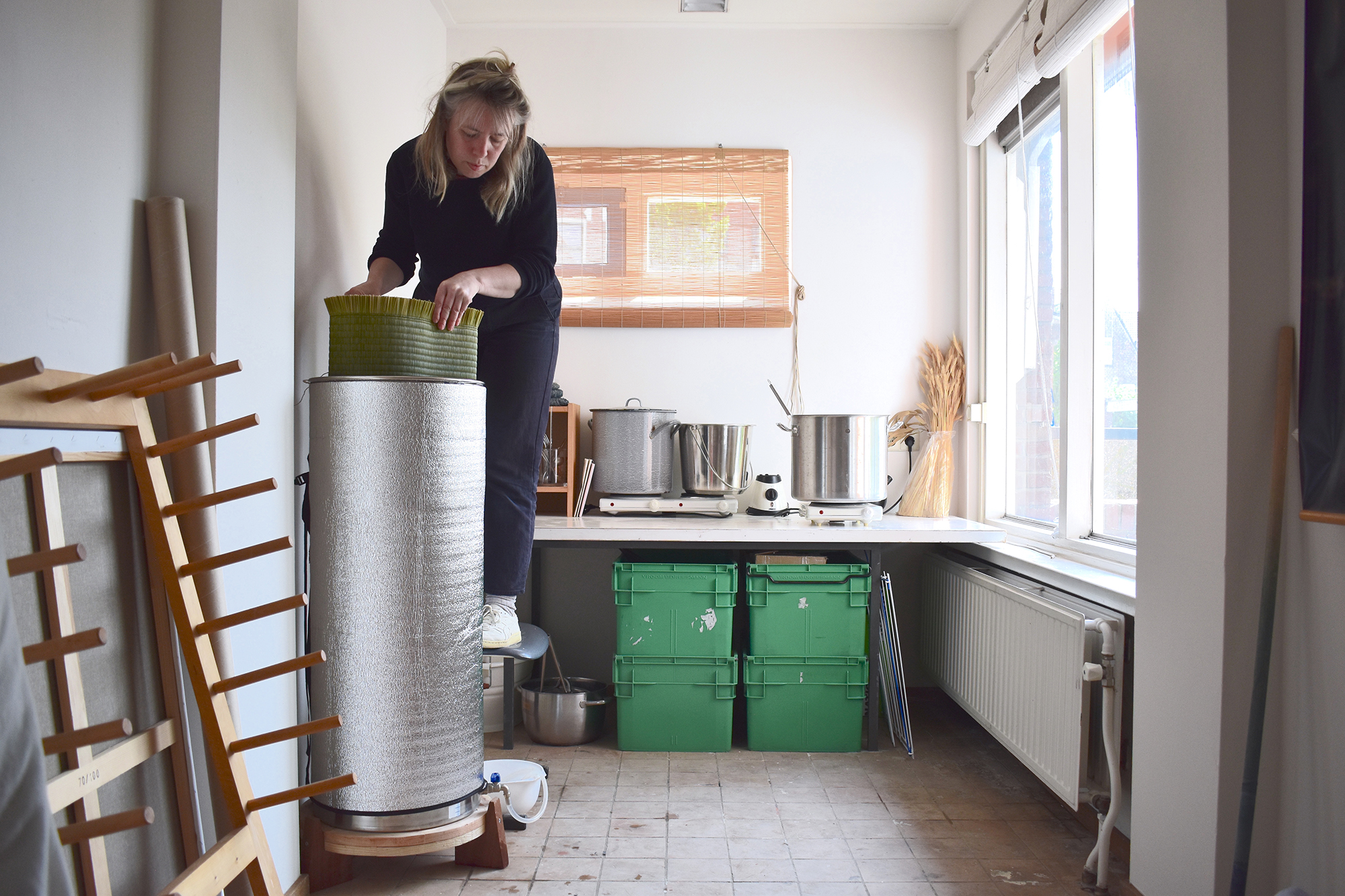
Suzanne Dikker is an interdisciplinary artist, researcher and art educator (MEd). Making and philosophizing about clothing and textiles often form the starting point. She specializes in craft techniques, including weaving, felting and vegetable dyeing of fabrics. In recent years her work has been shown in Museum Boijmans Van Beuningen, Nieuwe Instituut and De Wasserij in Rotterdam. She also wrote essays for APRIA and Textur Mag. Dikker considers it her mission to share her passion for sensory manufacturing processes with others and thus stimulate a collective sensory and ecological awareness.
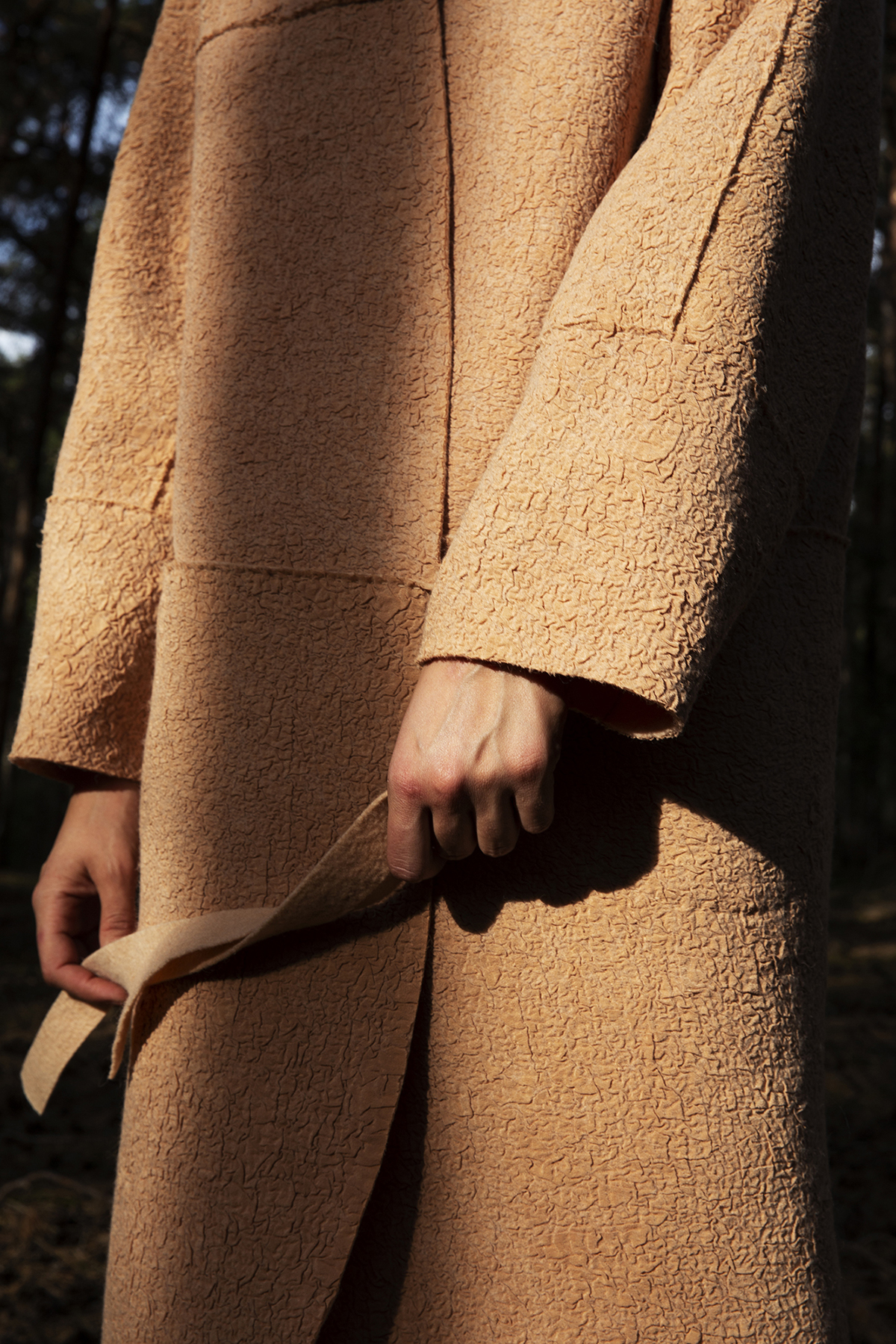
SUD by Suzanne Dikker (2009-heden) - The brand SUD stands for Sustainable Dutch Design by Suzanne Dikker, an ever growing collection of handmade garments and textiles. Each piece is created with meticulous care and great attention for our naturalcultural environment. They are made of biodegradable fibers and botanical dyes, in Dikker's studio in Rotterdam. The clothing ranges from carefully refined basic shapes to entirely handmade, soft sculptural pieces. The pieces are available in limited edition and on request. https://www.suzannedikker.com/sud-by-suzanne-dikker
Splashing, splattering, swirling solidarity (2024)
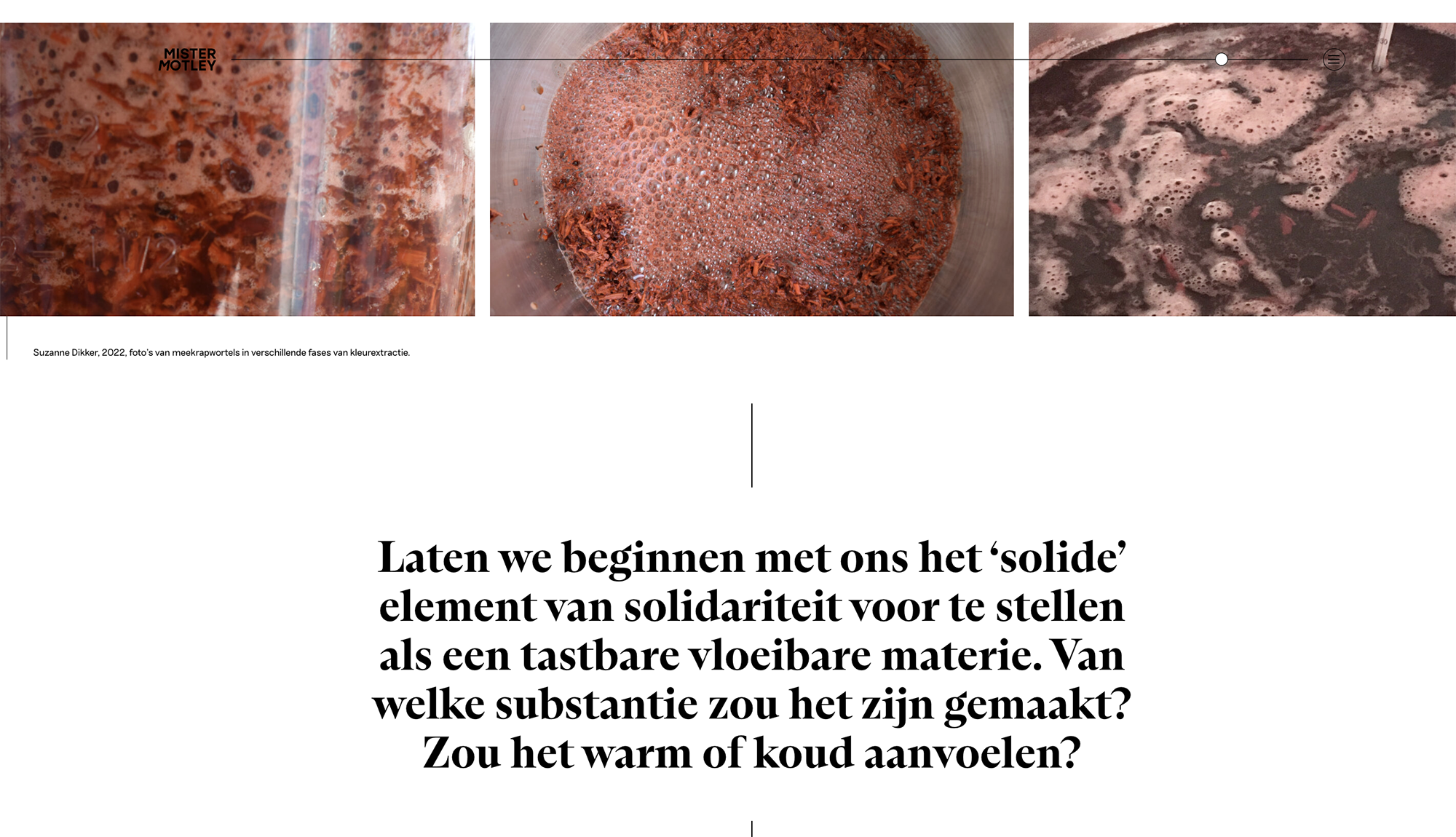
Klotsende, spetterende, kolkende solidariteit (2024) - Essay, published via Mister Motley. The original version of the text was published in English in 2023 by Textur magazine. Mister Motley asked me to translate the original text and position it within my artistic practice. “In this essay, Suzanne Dikker explores, based on her own creative practice and the book Bodies of Water by Astrida Neimanis, whether it is possible to propose a materiality of the concept of solidarity. 'In this scenario, solidarity would assume the role of the soft yet firm lubricant that enables us to feel our own path with and through each other.'” Read the article at: https://www.mistermotley.nl/klotsende-spetterende-kolkende-solidairiteit/
Punch card
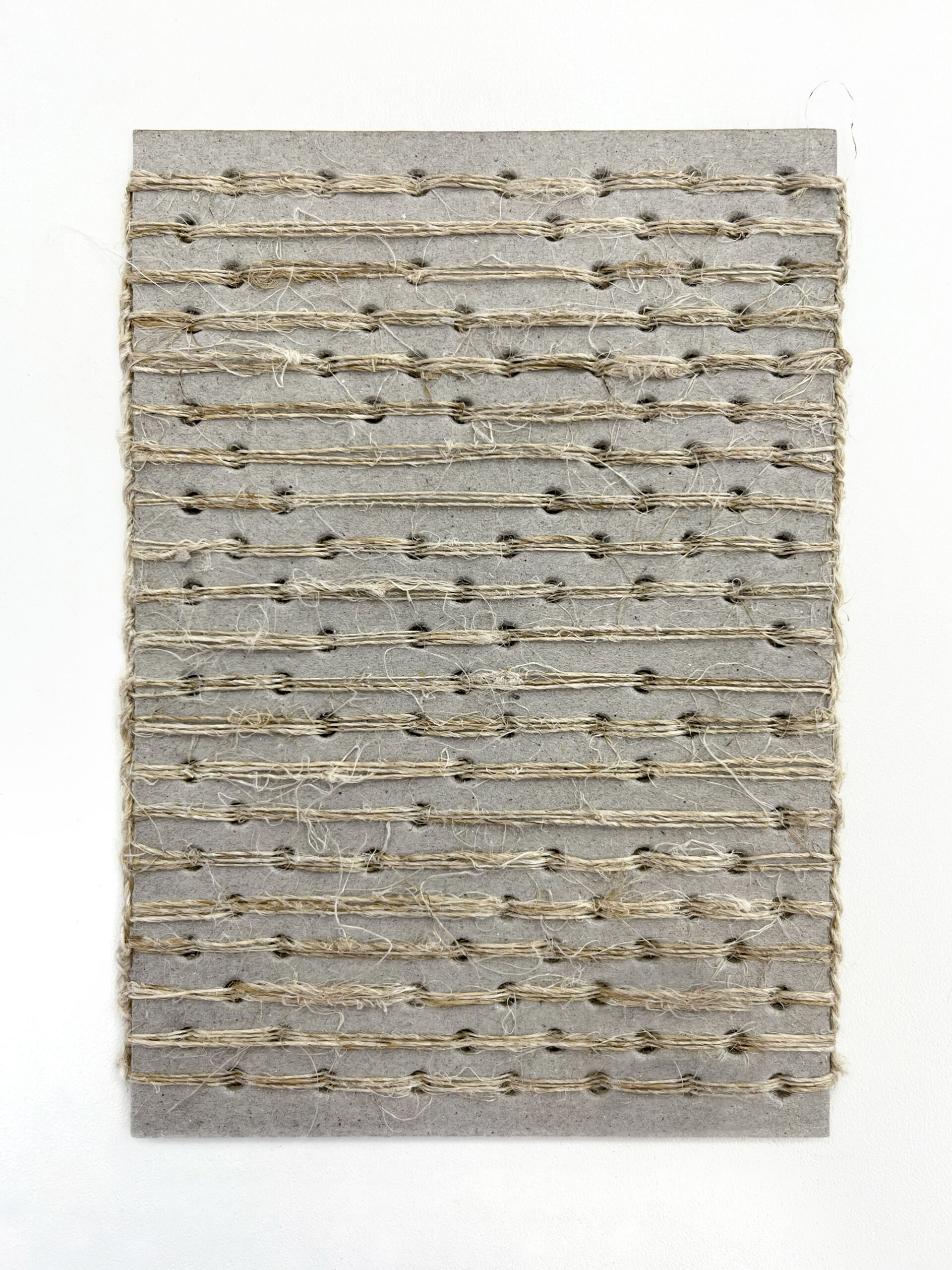
Punch card (2024) - In the context of The Linen Project's stewardship, a group of members joined forces in making a collection of small woven sculptures – using self-grown, handspun linen yarn and an A6 sized piece of cardboard. For my contribution, I took the iconic analog jacquard loom's punch card as a starting point. I punched holes into the paper base I was given - using a self-made stencil. The created 'grid' shows the silhouette of a flax flower in bloom. This act was followed by weaving the linen thread back and forth through the created opening. In doing so, a multi medial textured surface appeared, that simultaneously refers to the making process (the famous punch cards) and woven result (the patterned linen textiles) of the first jacquard looms.
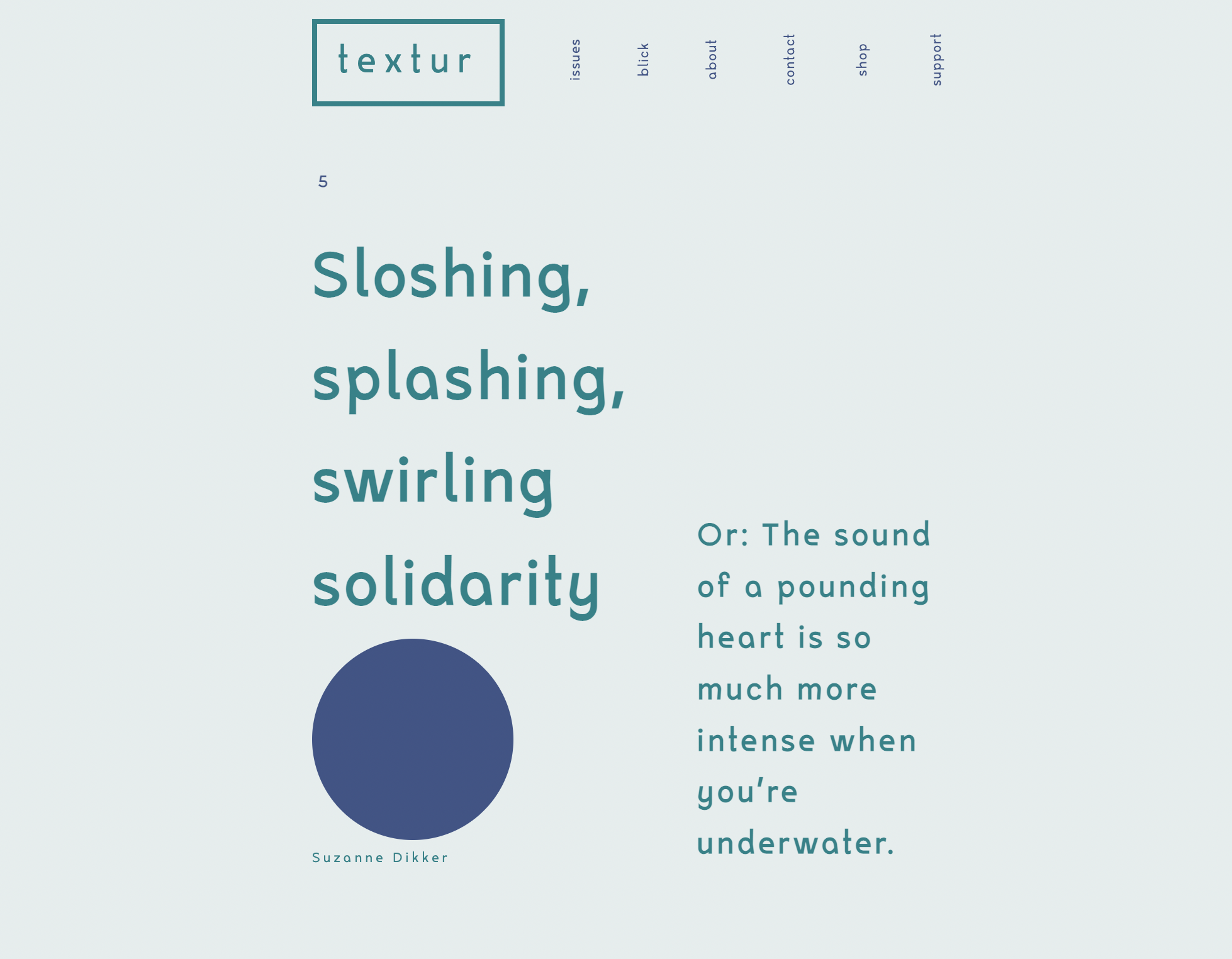
Sloshing, splashing, swirling solidarity. Or: The sound of a pounding heart is so much more intense when you’re underwater. (2023) - Essay, publication via Textur Mag (DE) "Deep ocean-colored symbols amalgamated with smoothly textured sheets of paper. Can you imagine the experiences of these flowing bodies of ink, only moments ago leaking through the soft wavy surface, finding their way along the veins of absorbent skeins of cellulose fibers, becoming some thing new together?" Read full article on: https://texturmag.com/issue-5/sloshing-splashing-swirling-solidarity-by-suzanne-dikker/
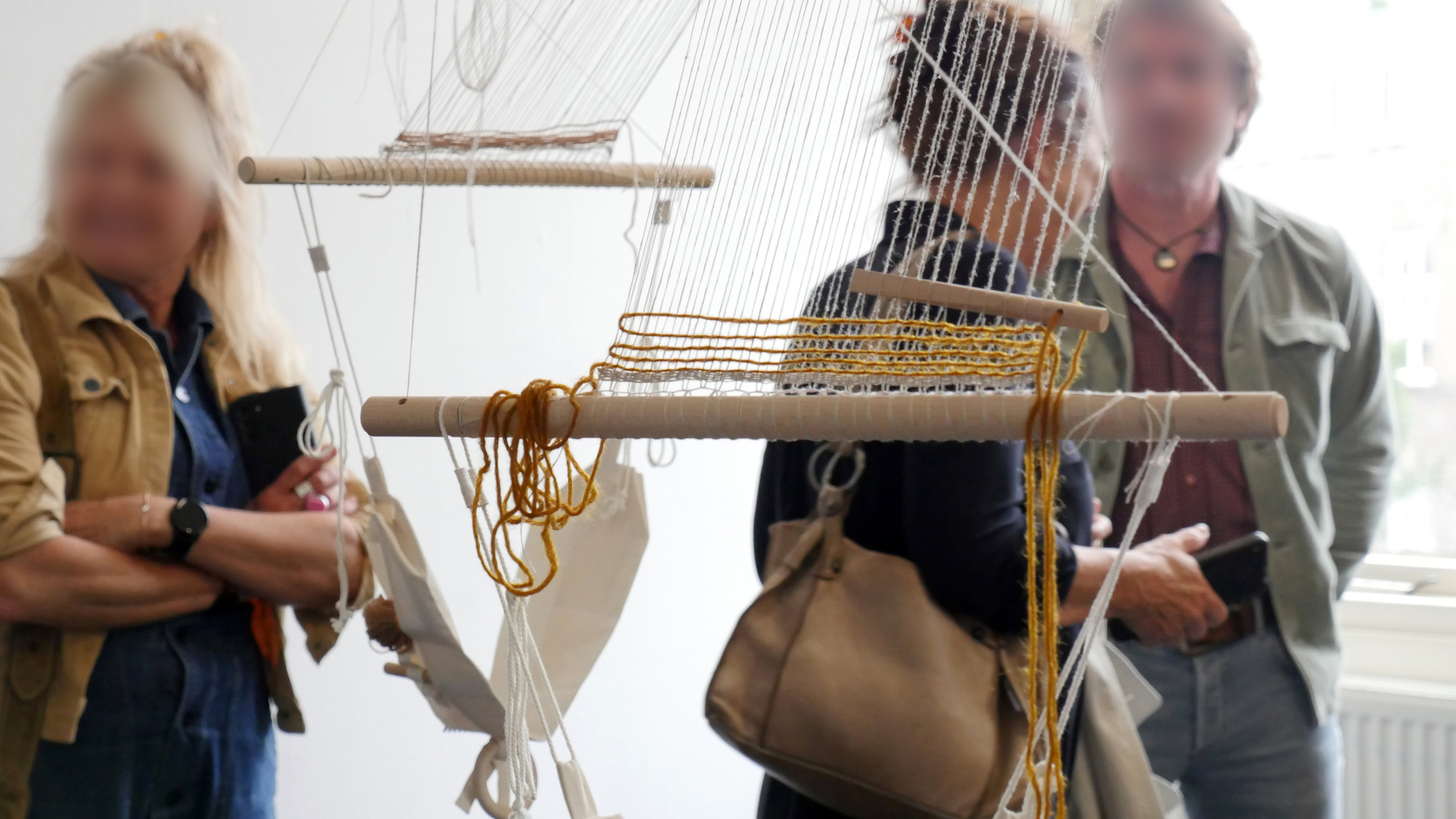
MAKING SENSE Strings Attached (2023) - To make tangible the felt connection with material which craftspersonship can bring about, I made a loom that not only makes the direct connection between one's own body and material to be sensorially experienced, but also those with other (seemingly more distantly related) folks and materials. During interactive sessions with participants, the loom is used as a tool to consciously take part -through the textile making process- in the ongoing process of shaping the world. Participants engage in an active relationship with each other as well as with the other materials involved. The design is based on one of the first looms used by humans: the 'backstrap loom'. The tension that is necessary to be able to weave, emerges by constant attunement and alignment of bodily weights. The design is modular. Each module -consisting of two slats, a series of warp threads, back strap, attachment cord and a weaving body- can be attached to each other by a system of rings. This construction allows the number of attachments to ever keep growing. Besides being a true example of the web-like connection between people, birch wood, cotton, linen and a bit of polyester, it could serve as a metaphor for the worldly network in which everything in some way, sometimes directly but more often via- via, is connected. By focusing attention and letting the body speak, the threads are joined into a collective fabric that takes shape through the tender act of hand-weaving. The repetitive threading of the yarn creates space for thoughts to flow, feelings to be and new insights to reveal themselves.
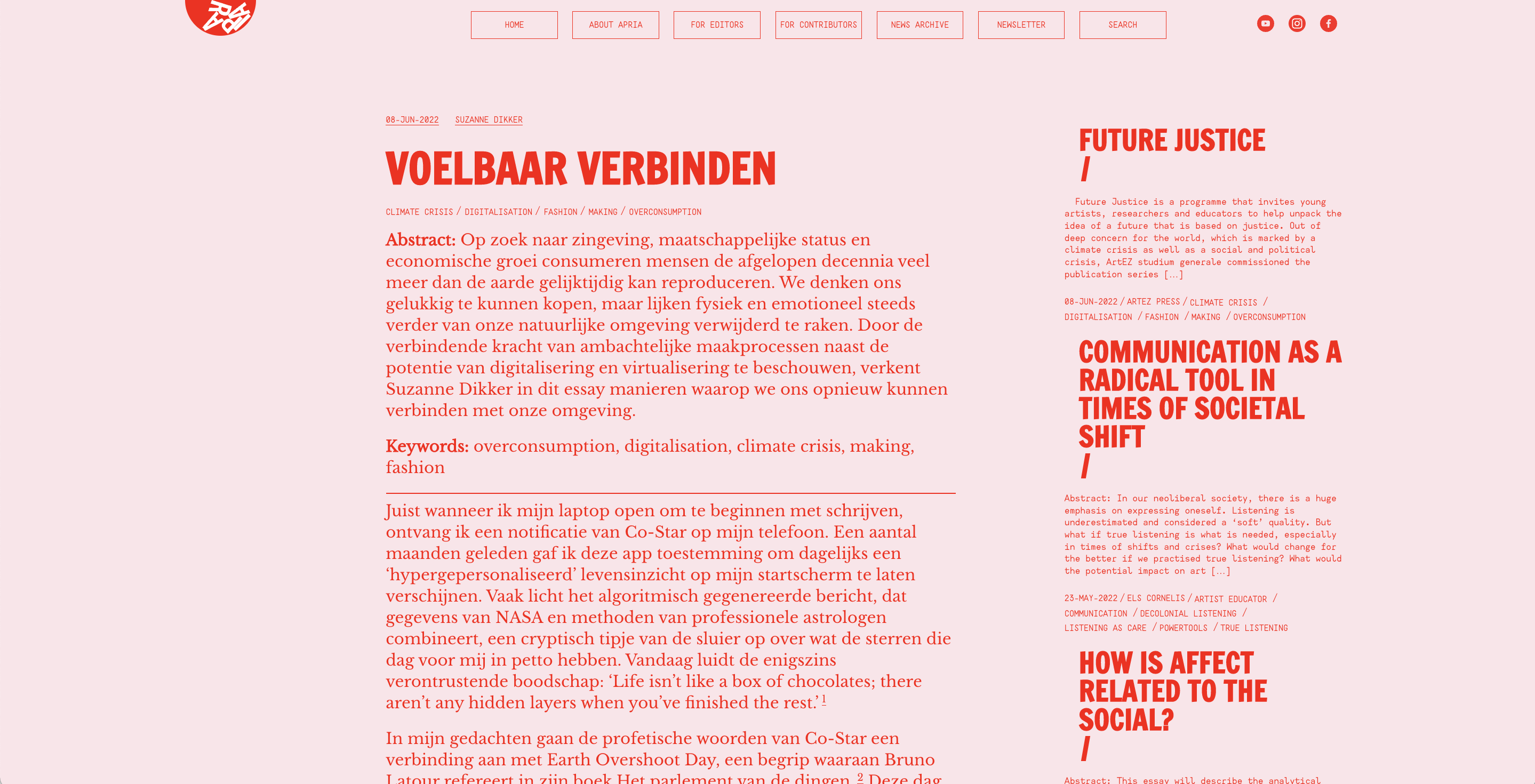
Voelbaar verbinden (2022) - Essay, publication via APRIA. https://apria.artez.nl/voelbaar-verbinden/
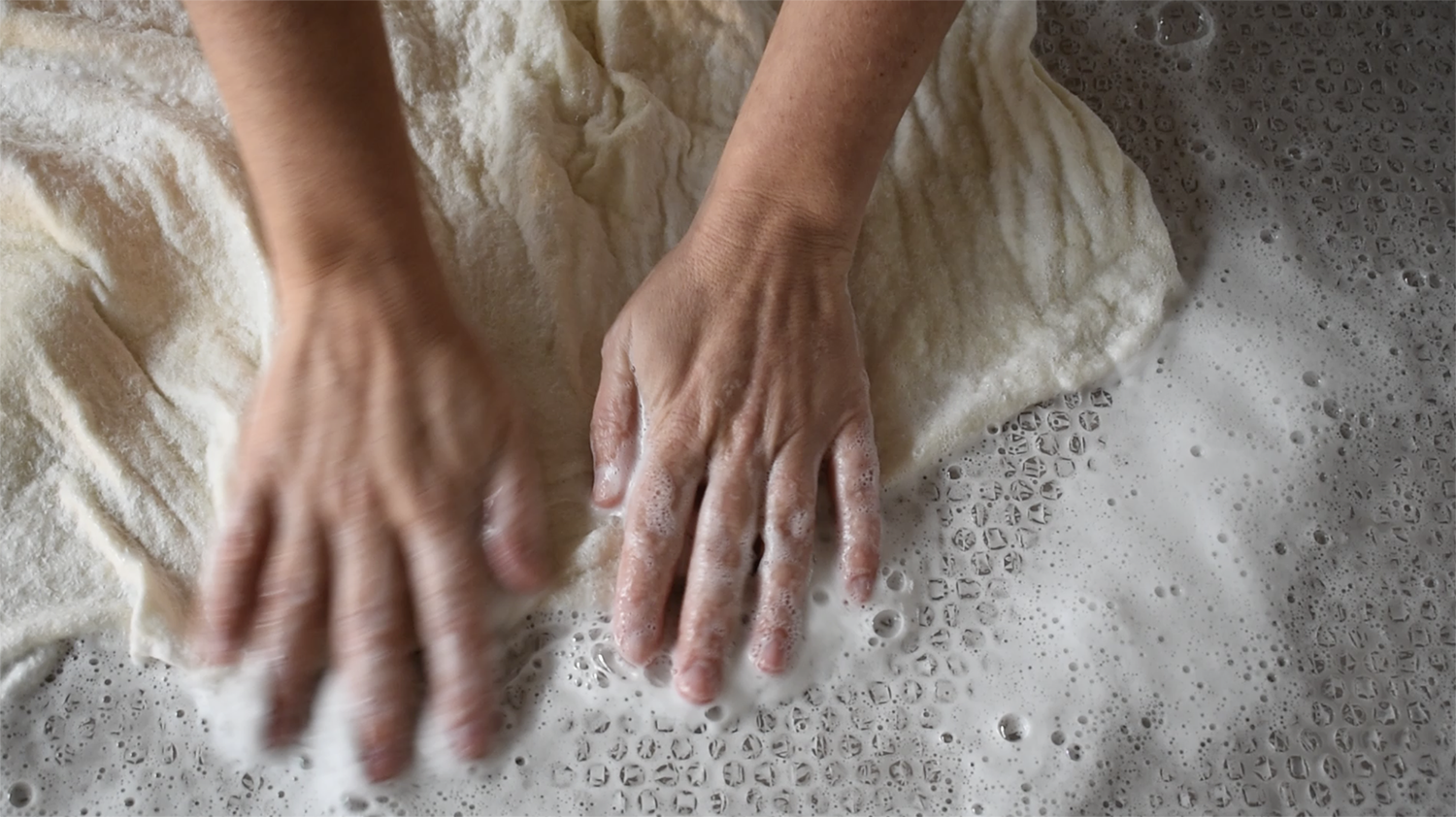
FELT (2021) - FELT is a sensory display of a felt process. This video work is as much about the process of felt making as it is about feeling. It invites participants to enter a meditative state of being in which repetitive movements of the hands, the tactility and transformative qualities of textile fibers, together with gentle sounds of dripping water, lead the way to a deeper understanding of physical making processes.
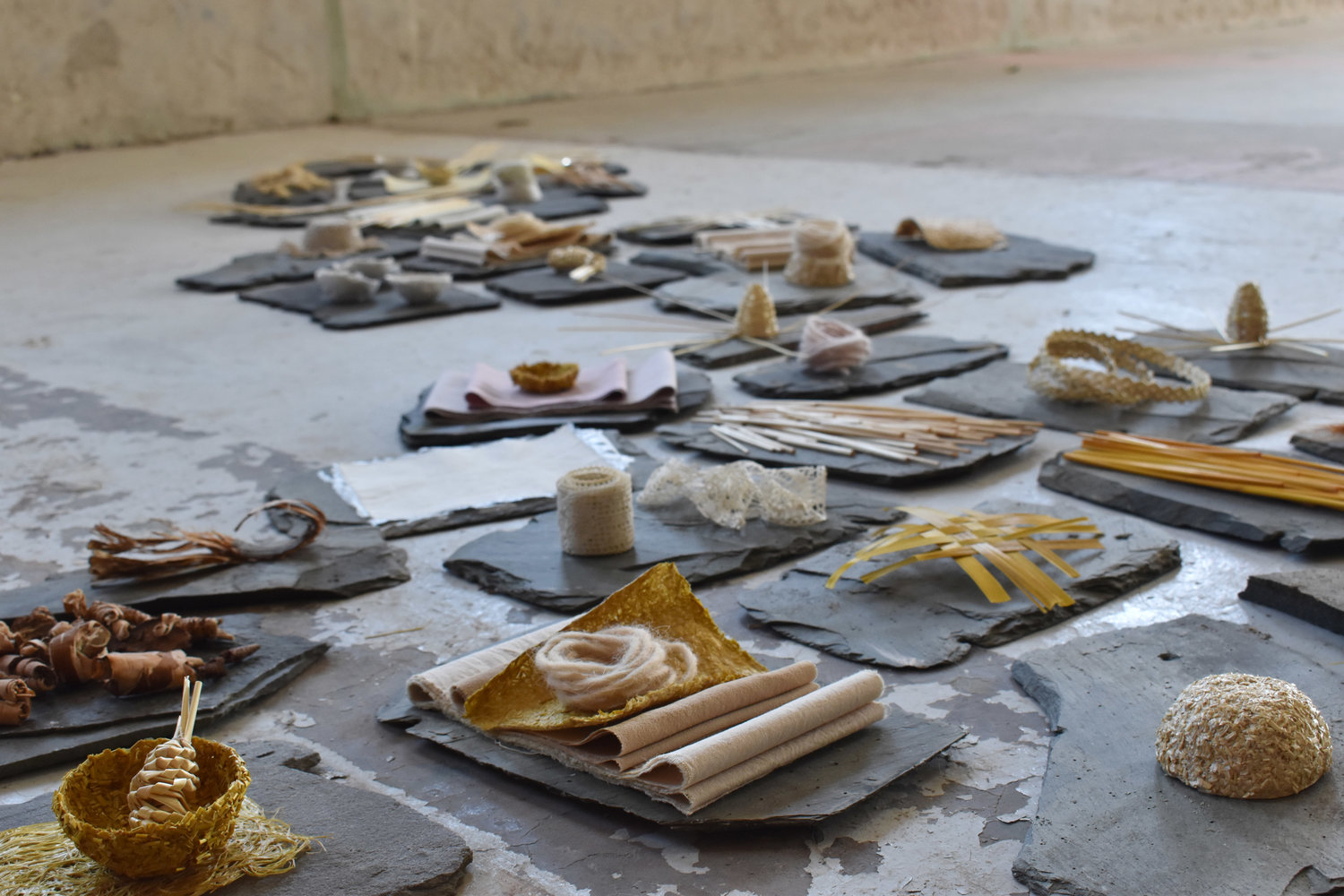
STRAW (2018) - Throughout history rye grain has played an important role in the Scandinavian food supply. Grain was ground to flour, from which the famous rye bread evolved. The remaining straw was turned into utilitarian objects and festive decoration. Apart from its highly aesthetic qualities, straw has proven to be a strong, water repellant and heat insulating fiber. Rye straw as a base fiber for contemporary surface design ''During a month long artist-in-residency at Not Quite (Fengersfors, Sweden) I researched the possibilities of creating a flexible surface using rye straw as a raw material. I learned about the rich history of Swedish traditional craftsmanship and experimented with various techniques. Each separate element of the plant has its own characteristics and requires a specific approach. I developed a way of extracting dye from the stems, used starch from the grains to glue fibers together and created cocoon shaped sculptures with the softer upper parts of the stalk.'' What started out as an open ended, exploratory material research, gradually took the shape of a refined installation of delicate palm-sized sculptures. This landscape of carefully piled up material samples, shows a personal interpretation of the local naturalcultural environment. The palette of light pastels, accompanied by a broad variety of golden yellows and occasional reddish hues form a subtly vibrant composition of textures and colours. The project and exhibition are made possible with support of: Konstnärsnämnden, Kulturrådet (Swedish Arts Council) and Sveriges Konstföreningar (The National Association of Swedish Art Societies).
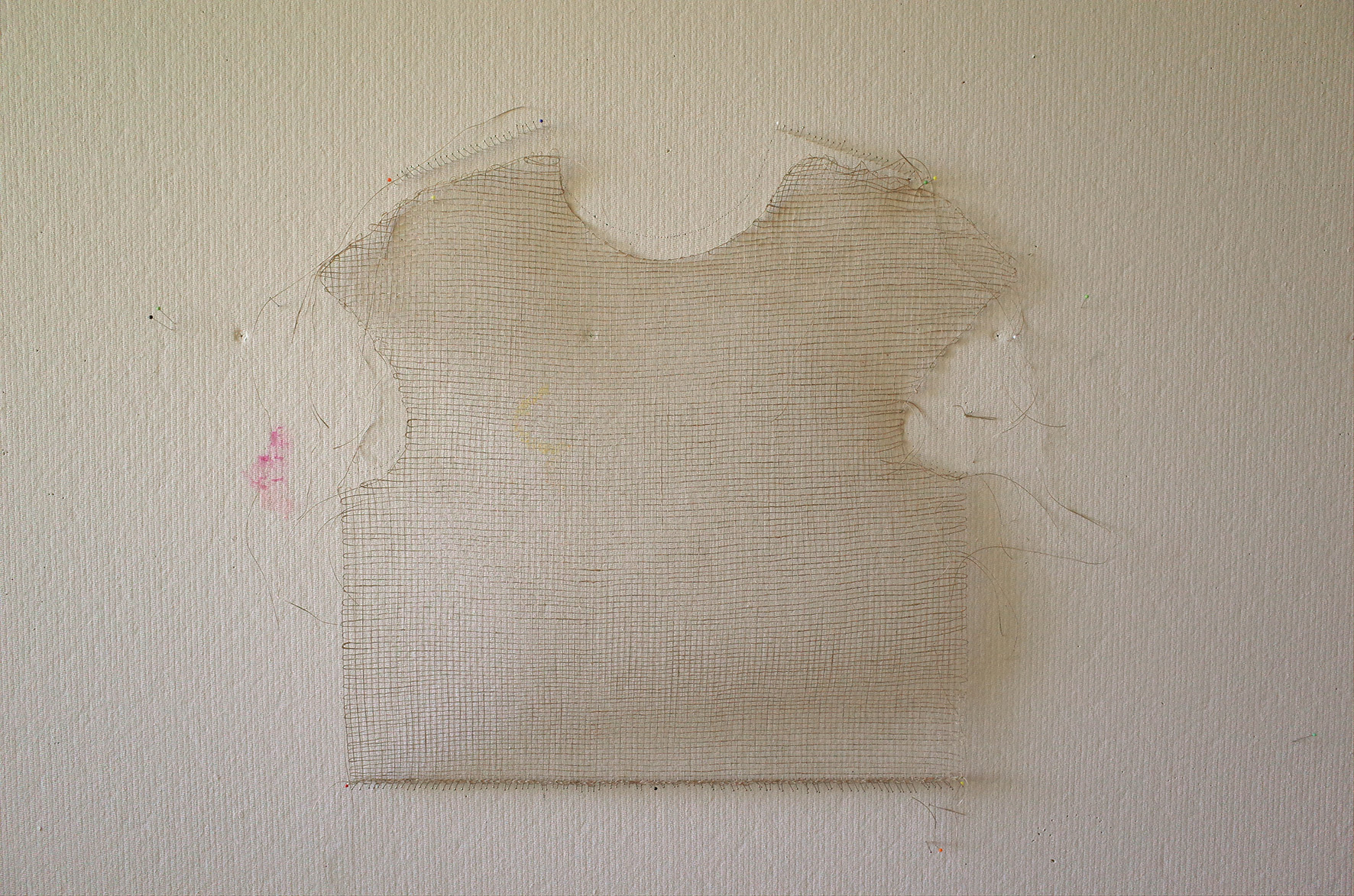
OFF THE WALL (2018) - Within the field of art and design, rich ideas have the tendency to be reduced to just their essence. They are expected to be captured within a final piece, which ideally represents an ultimate moment in time where everything comes together in harmony. Original thoughts on the subject get reshaped along the way, sometimes harsh decisions have to be made for the sake of the artwork, and more than often time and deadlines play their ample parts. “I believe the process of making deserves to be in the spotlight just as much as the aimed object itself. Off the wall can be seen as an ode to the labor intensive process of making textiles. It celebrates the time and attention it takes for a piece of clothing to come into existence.” Off the wall celebrates the process of creation “A spool of pure linen yarn, reclaimed from a local thrift store was the starting point of this project. As an artist-in-residence at Ricklundgården (Saxnäs, Sweden) I devoted my stay to weaving the front and back panel of a temporary, garment shaped installation on the studio wall. By first thoughtfully placing metal pins on a wooden board, creating outlines that refer to a clothing silhouette, the yarn was vertically stretched around the edges as a warp base. The weft threads where thereafter evenly woven in by hand, forming a coarse flat binding. The repetitive movement of weaving each line by hand, while touching every inch of the thread, lead to a meditative state of being and a sincere connection with the material.” The use of flax fibers for practical purposes dates back to the stone age. At first only ropes and fishing nets were constructed out of twined straw. After the invention of the spinning weel in the early sixteen hundreds, soon the plants were processed into string. The development of weaving looms made substantial progression between the eighteenth and nineteenth centuries. In Sweden, several famous damask weaving mills were blooming during this period and the countryside was covered by blue-flowering flax every spring. Off the wall aims to continue this long tradition of flax weaving in an authentic, yet contemporary way.

Lezing/presentatie MAKING SENSE

Date:
Location: LearningLab AHK
In association with: ArtEZ University of the Arts

Lecture/presentation about research '𝘔𝘈𝘒𝘐𝘕𝘎 𝖲𝖤𝖭𝖲𝖤' during the annual symposium Masters Art Education.

Installatie MAKING SENSE

Date:
Location: Finals exhibition @ ArtEZ University of the Arts
https://www.artez.nl/nl/student/14560/suzanne-dikker

Can you feel it?

Date:
Location: Putsebocht 3 (PB3)
https://www.instagram.com/makingsense_project/

Collectiepresentatie SUD

Date:
Location: De Wasserij
In association with: SKAR

Collection presentation, workshop/demonstration and talk during the opening weekend of De Wasserij.

https://dewasserij.cc/agenda/demonstratie-plantaardig-textiel-verven/

Tactiele experimenten

Date:
Location: De Vitrine
https://www.instagram.com/de.vitrine/

Artist in Residence

Date:
Location: Ricklundgården
https://ricklundgarden.com/en/produktkategori/art-residence/

Artist in Residence

Date:
Location: Not Quite
In association with: Konstnärsnämnden, Kulturrådet (Swedish Arts Council), Sveriges Konstföreningar (The National Association of Swedish Art Societies)
https://www.notquite.se/en/

Artist in residence

Date:
Location: Icelandic Textile Center

The New Haberdashery

Date:
Location: Het Nieuwe Instituut

Project Rotterdam

Date:
Location: Museum Boijmans van Beuningen

Project Rotterdam is a group exhibition at Museum Boijmans van Beuningen, showcasing artists and designers who work in Rotterdam.

Suzanne Dikker collectie handgemaakte kleding en textiel

Date:

Ever-growing collection of clothing and textiles and commissioned work. Specialization in traditional craft techniques.

https://www.suzannedikker.com/sud-by-suzanne-dikker
This artist has no awards yet.