Hans Wilschut

video , urban , social , installation , photographs , movie , Conceptual , Audiovisual , Archives

The urban landscape plays a leading role in my practice, resulting
in photographic works, video works and publications. How can I capture places?
so that past, present and future do not appear as a sequence, but as
equivalent forces that are simultaneously present in the image?
I look for ways to slow down time. I want to create images in which
the digital speed stops for a moment, so that watching takes full attention again
Can I condense time into key moments, open up those moments?
and give them more breathing space than the current rhythm usually allows?
I open myself to everything that happens and what I have previously experienced in my
abandoned his career.
To arrive at my images I scout and organize my viewpoints
carefully and I rarely take photos casually. Usually there is a process
from preliminary research in which I return, compare and weigh up.
I don't underestimate casual photos, but I often retake them, on
look for a more precise image and a better placed look. Sometimes I work
with multiple moments that I bring together into one image, to capture a situation
open, clean up or intensify. Where necessary I use
aerial platforms and sometimes a helicopter to have the freedom to change the composition
to achieve what the image demands. Color, detail, moment, and perspective
are not stylistic devices after the fact, but already parts of the
thinking within the recording. Although I have been working in large format digitally for years,
yet my recording mentality is still as slow as the time I
traveled the world with a 4x5 inch camera.
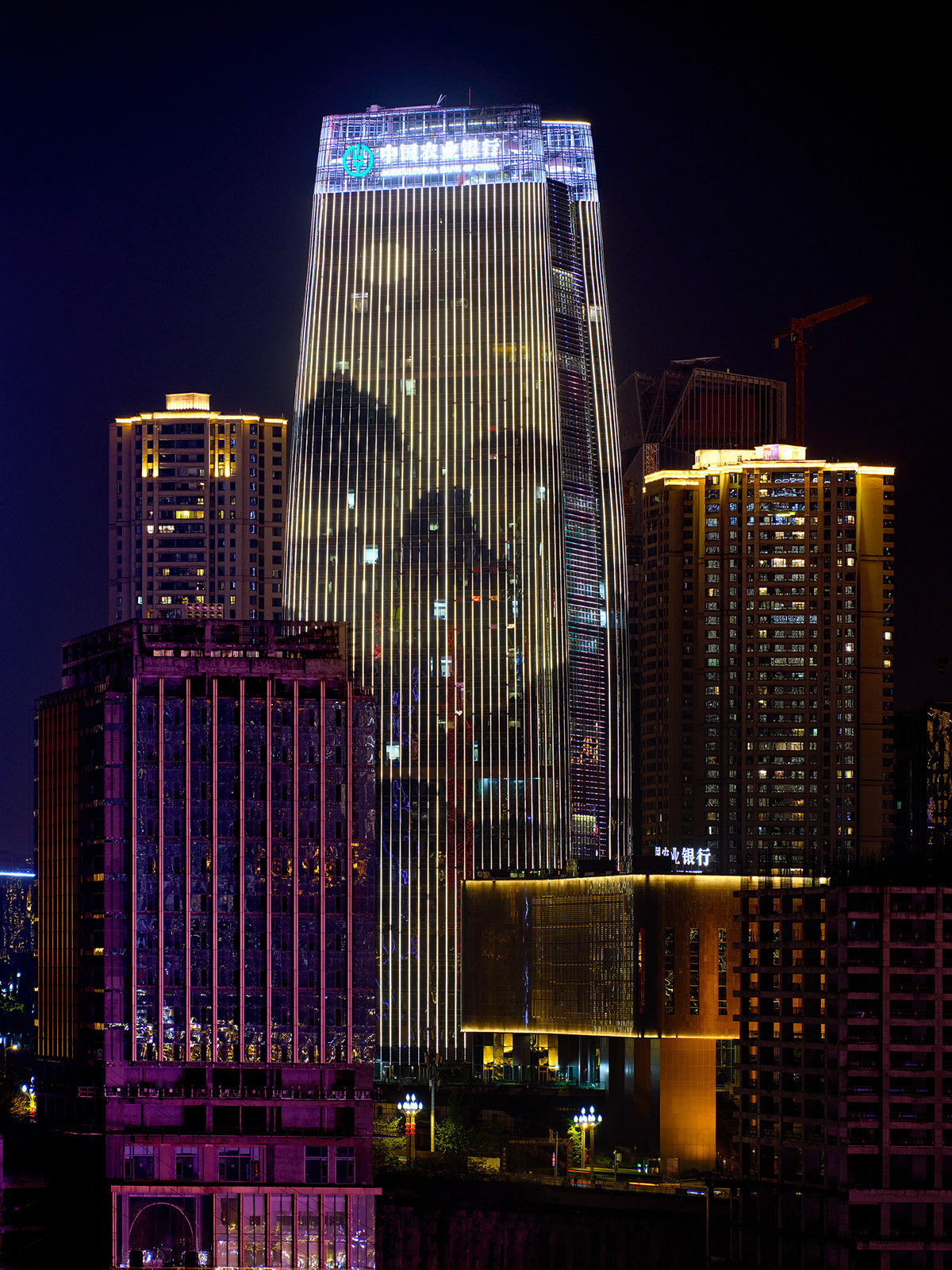
Simulation of Elsewhere
Simulation of Elsewhere, 2026, archival print/dibond/wooden frame/museum glass, 150-114 cm Simulation of Elsewhere depicts an urban cityscape in the city of Chongqing, where the longing for elsewhere attaches itself to a building with a giant video screen. What appears on that screen—travel footage, advertisement-like panoramas, glimpses of another world—slides across the facade and blends with the everyday rhythm of the street. Hans Wilschut has edited various video sequences from that scene into a unique landscape: a place that doesn't really exist anywhere, but briefly illuminates in the photographic work, as if the city itself opens a temporary window to the outside world.
History
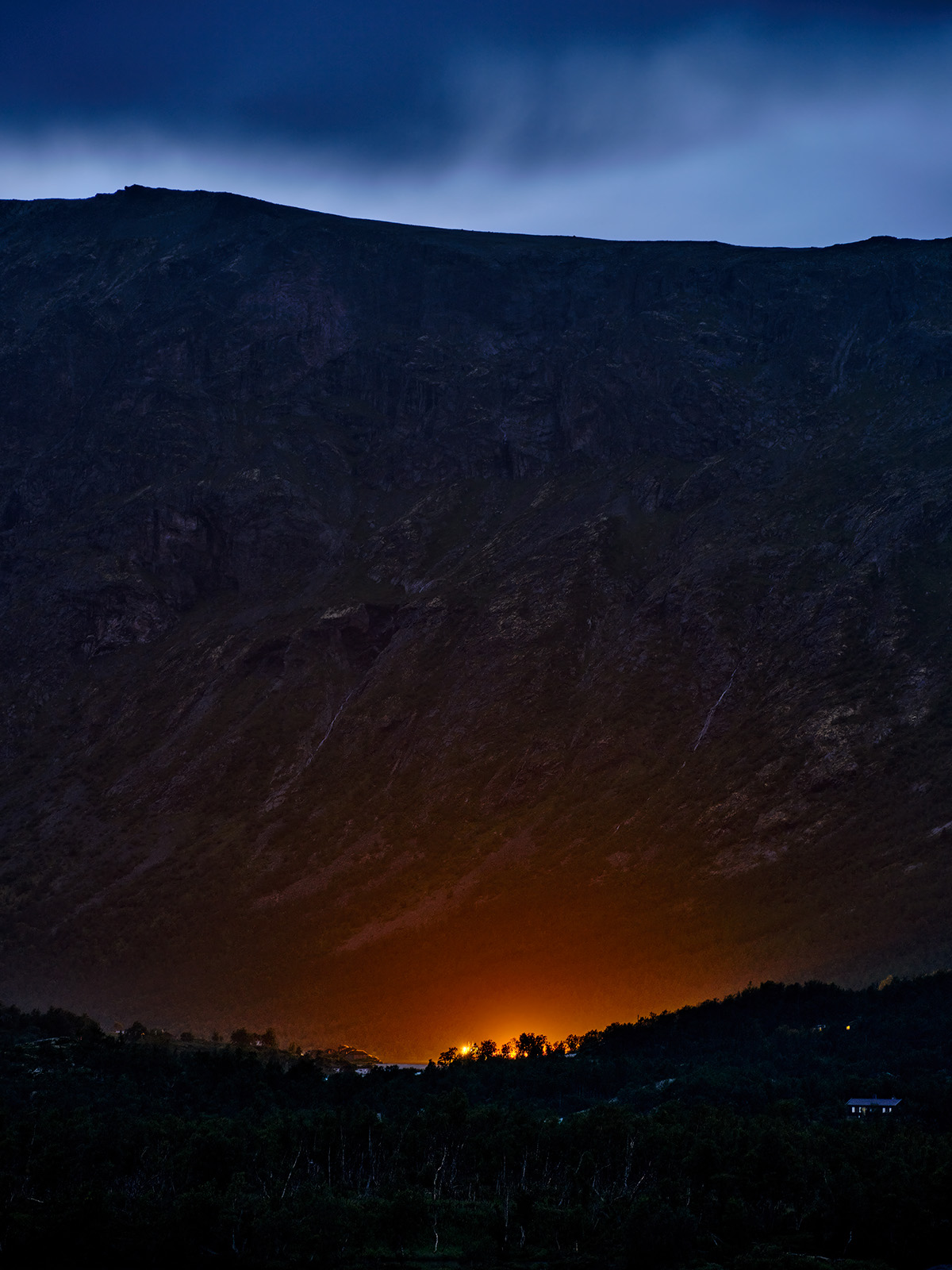
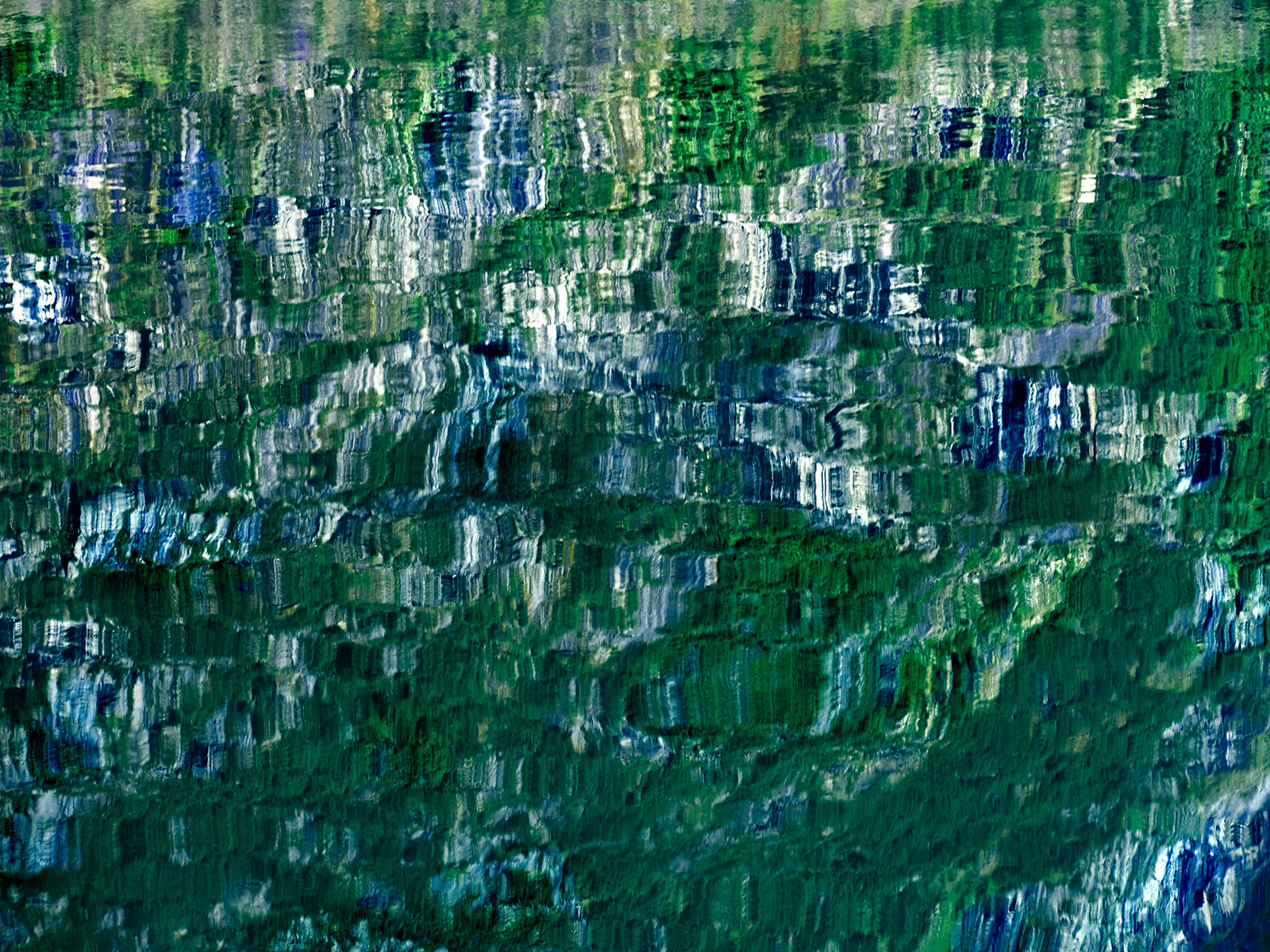
Anamnesis, 2026, archival print/dibond/white frame/museum glass, 114-150 cm The work "Anamnesis" was created in Norway, where nature is inaccessible but overwhelms. The mountains are bearers of time; in their surface, the earth's development remains tangible. In the water that reflects them, that movement repeats itself. The image captures the reflection at the moment recognition begins to fade. What remains visible is no longer a mountain, but a vibration between image and memory. The water's surface becomes a place of transition, where the real and the remembered converge. "Anamnesis" refers to the process of remembering that precedes consciousness. In this image, looking becomes a form of remembering, as if nature itself is evoking its history.
The Waiting Line
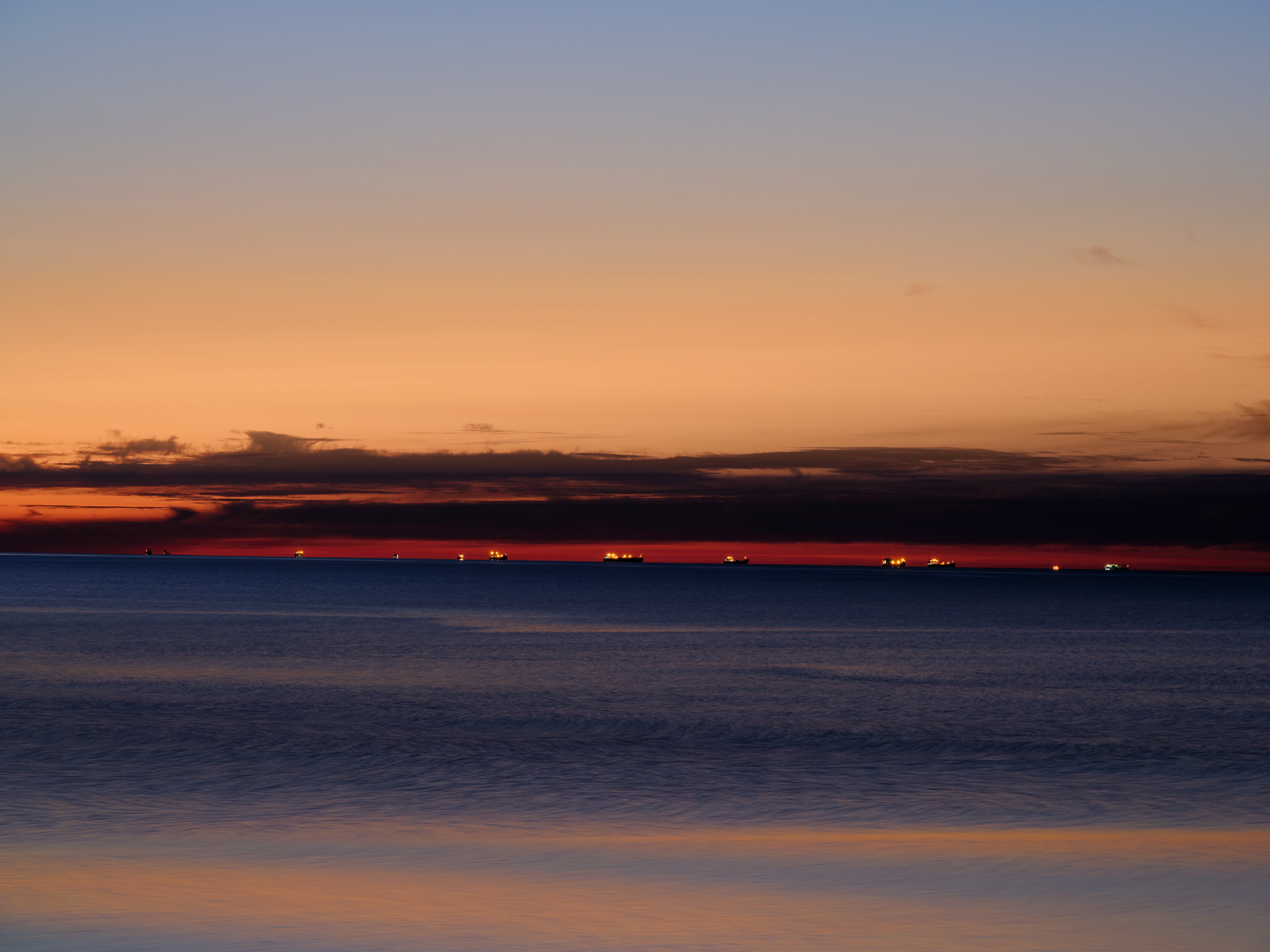
The Waiting Line, 2026, archival print/dibond/white frame/museum glass, 114-150 cm Skagen lies at the very tip of Denmark, where the North Sea and the Kattegat meet. It is a place of transition, between land and water, between stillness and movement. On the horizon, ships often lie idle at sea, waiting for permission to sail on to Gothenburg or the Baltic Sea. In that waiting, something of Skagen's nature seems to be contained, a place where time slows down, where one neither arrives nor departs. The city itself still breathes the spirit of light that once drew painters like P.S. Krøyer and Anna Ancher here. It is a light that does not blind but envelops, a thin skin between day and night where color dissolves into air. Skagen is northern, but not cold; it possesses a melancholic clarity typical of borderlands. Here, the landscape becomes a mirror of inner space, the sea an imaginary horizon where thoughts gather, just like the ships that wait there, as if they too do not know whether they are on their way or already home.
Permeation,
Permeation, 2025, archival print/dibond/wooden frame/museum glass, 150-114 cm
Candyland
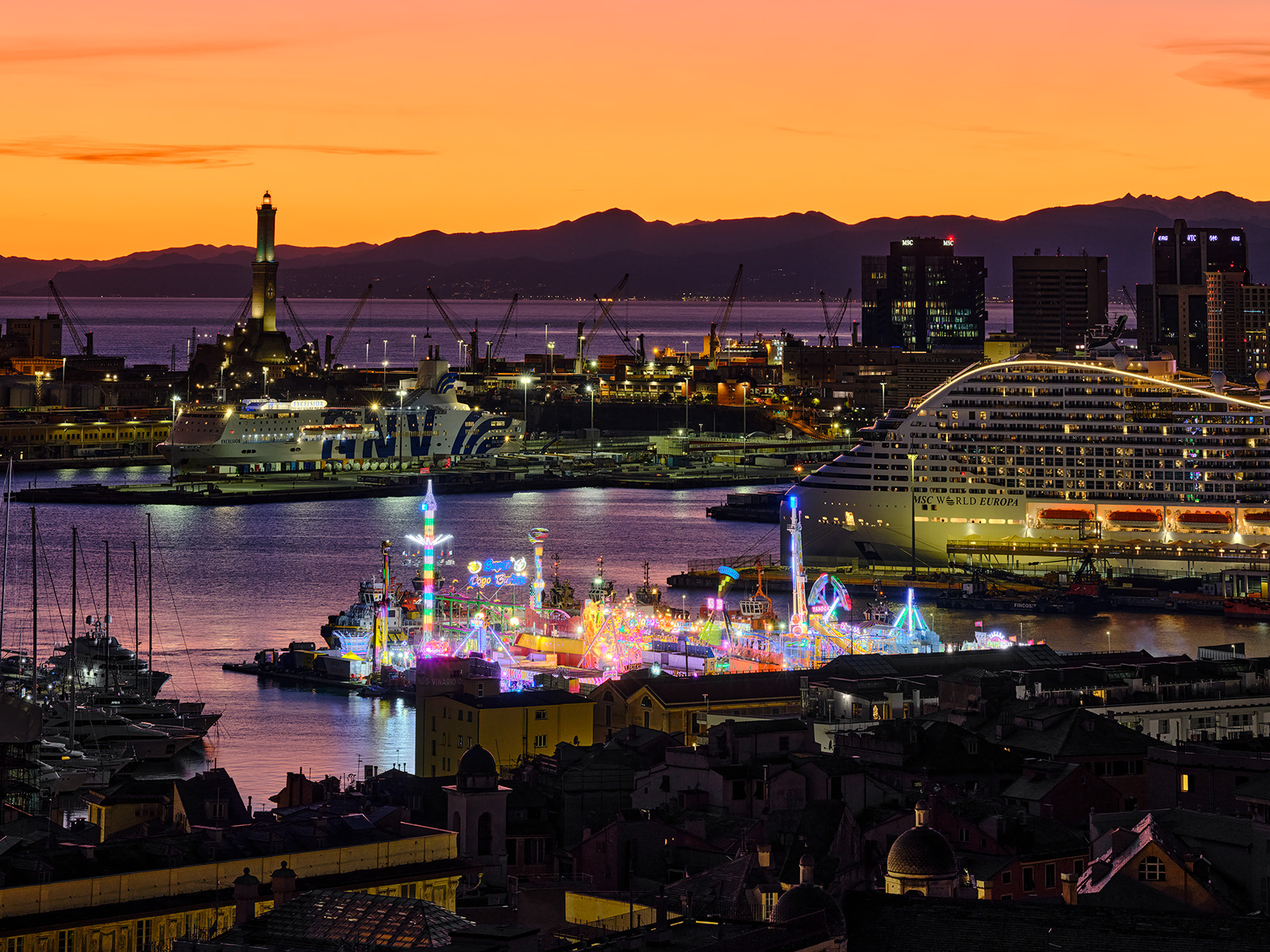
Candyland, 2025, archival print/dibond/white frame/museum glass, 114 -150 cm The port of Genoa, located on Italy's northwest coast, is not only one of the largest and most important ports in the Mediterranean, but also a fascinating blend of historical significance and modern activity. As a hub of trade, culture, and history, the port has played a crucial role in the development of the city and the region for centuries. With a history dating back to the Middle Ages, Genoa was once a powerful maritime republic that competed with Venice for control of trade routes. Traces of this glory are still visible in the imposing palazzos along the coastline, the stately La Lanterna lighthouse, and the well-preserved historic city center, a UNESCO World Heritage Site. Today, the port is a dynamic place where traditional and modern activities converge. It is a major hub for freight transport, cruise ships, and ferry services, and plays a vital role in the Italian economy. At the same time, the area has been transformed into a cultural hotspot, thanks in part to the redevelopment of the old port area by the renowned architect Renzo Piano.
Matera
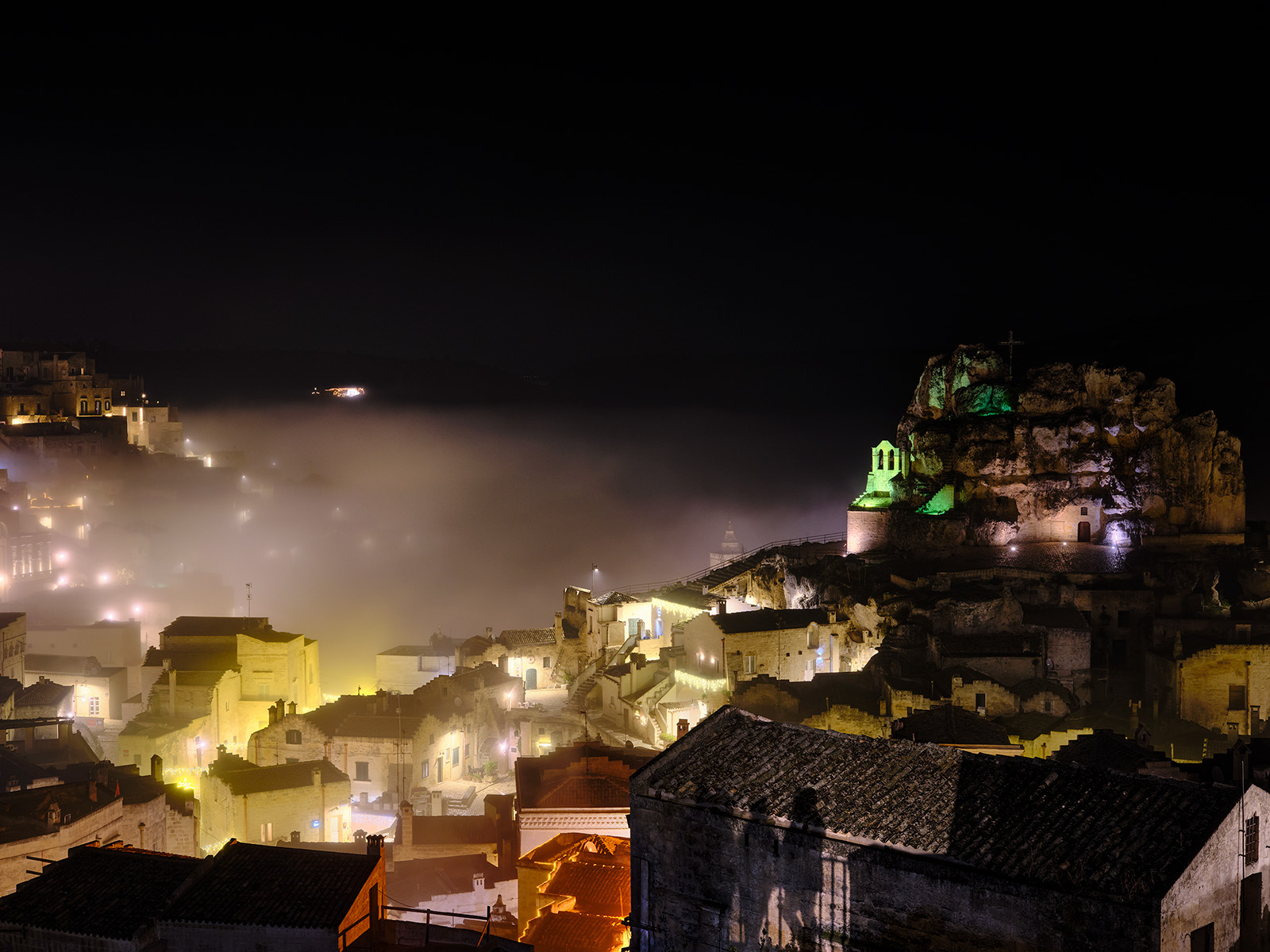
Matera, 2025, archival print/dibond/wooden frame/museum glass, 114-150 cm Matera at night seems to drift into another era, bathed in the soft glow of streetlamps and the rising mist slowly erasing the Sassi. In this ancient labyrinth of cave dwellings and rock churches, the silence is almost tangible, a tranquility rare in a world where tourists everywhere capture themselves in selfies, their phones shining brightly against the darkness. Hans Wilschut's work reveals a different reality: a Matera without human presence, stripped of the fleeting glances of visitors who see the city merely as a backdrop for their bucket lists. His photography seeks out the moments when the city rediscovers itself, detached from the constant compulsion of travelers to record. In this stillness, the anecdotal snapshot culture disappears, creating a contemplative space where architecture and light take center stage. A night photograph of Matera in the spirit of Wilschut allows this ancient city to breathe like a living organism. As we gaze at the image, the realization slowly dawns on us: we are nowhere, and never again, alone.
Chronolith
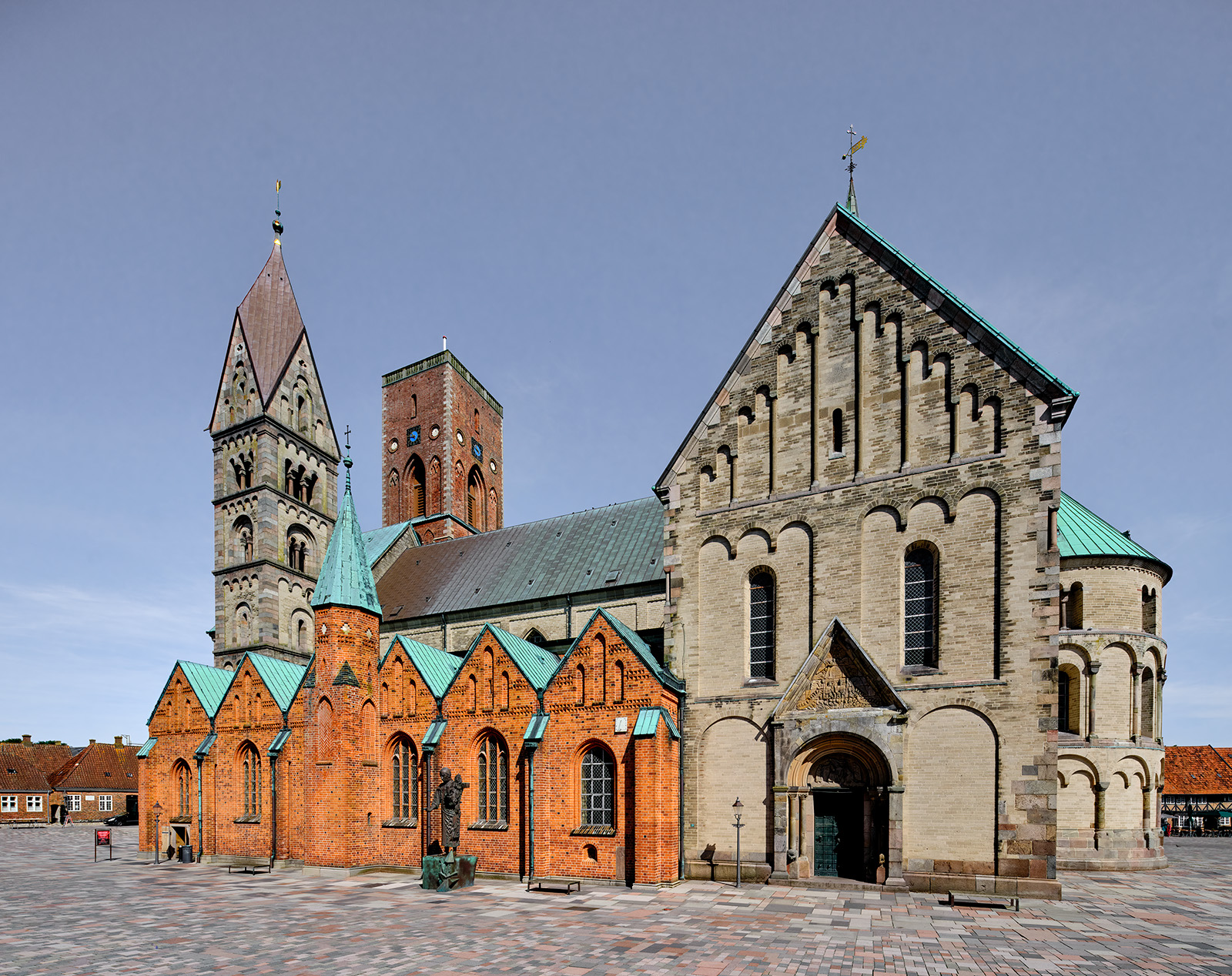
Chronolith, 2024, archival print/dibond/white frame/museum glass, 114 -150 cm In the heart of Ribe, where the streetscape folds around centuries of human presence, the cathedral rises like a composite of time. No part speaks the same century; its skin consists of successive layers of faith, restoration, decay, and imagination. Brick displaces tuff, Romanesque arches support Gothic windows, and between these layers, light flows as a silent witness to change. Inside, time cannot be measured but felt. The walls breathe the moisture of medieval winters, the floor bears the marks of centuries of praying feet. What was once sacred is now memory, what was once new is now patina. Yet everything remains present, compressed into a single breath. Chronolith, the stone of time, is rightly called this image. The cathedral is a geological formation of human history; every renovation, every repair, every scar a deposit in the layers of memory. Here, architecture becomes sediment and time becomes building material.
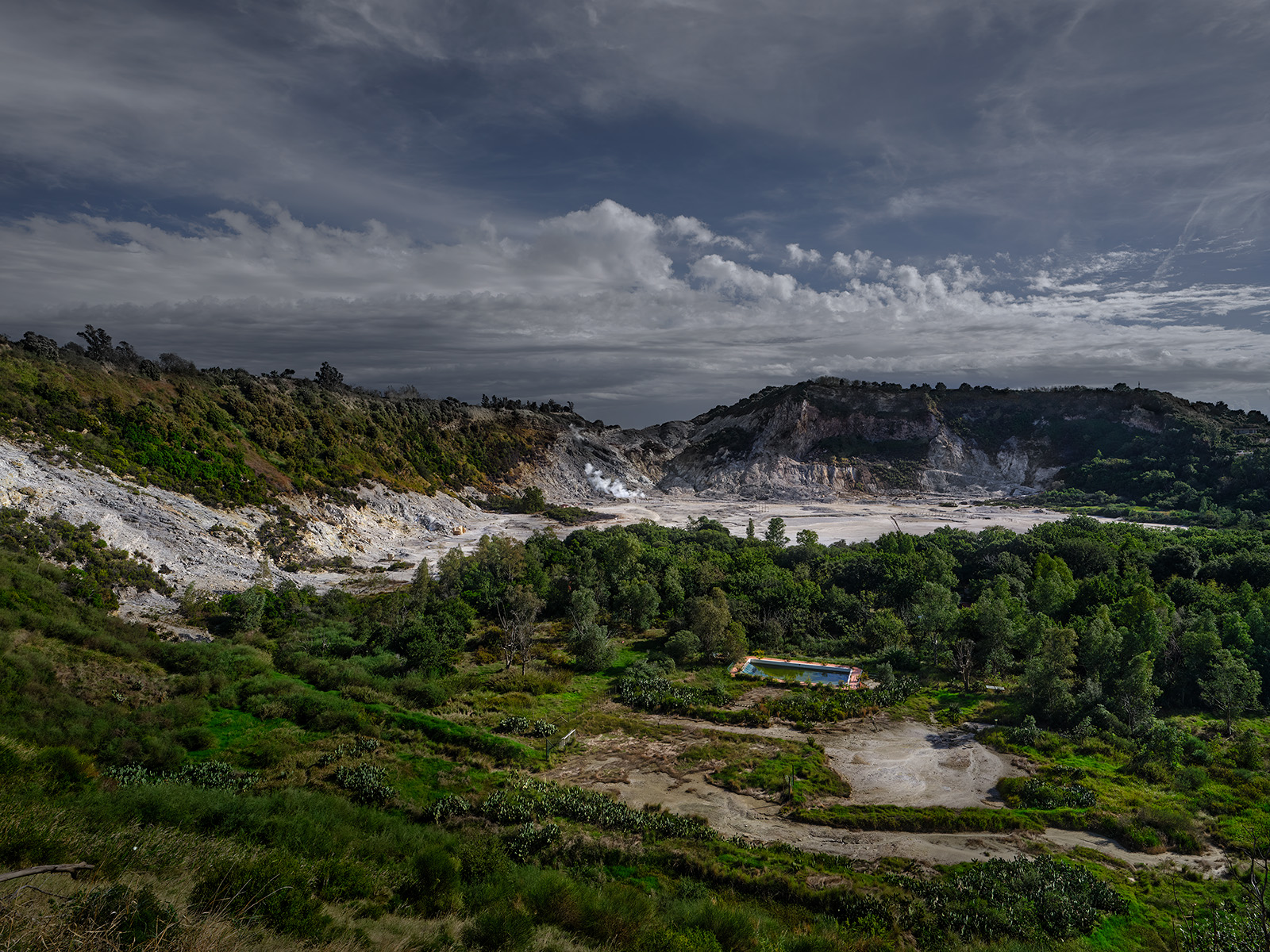
Solfatara, 2024, archival print/dibond/white frame/museum glass, 114 -150 cm
Solfatara, 2024, archival print/dibond/white frame/museum glass, 114 -150 cm The only one of Pozzuoli's three volcanoes still active dates back to 1198. Solfatara volcano, 458 meters high, originated from a phreatic eruption. This means the magma came into contact with groundwater, causing steam and pulverized rock to be emitted. In ancient Roman times, this volcano was known as Forum Vulcani and was considered a healing spring. While the volcano is only partially active, it still has many solfataras, a type of fumarole named after it. Solfatara is located in the Campi Flegrei volcanic region in Italy, caused by the Alpine orogeny, when the African plate collided with the Eurasian plate. Solfatara is one of the most active parts of this supervolcano. The Solfatara crater has been closed to the public since 2017 due to a serious incident involving visitors. The adjacent campsite has since fallen into ruin.
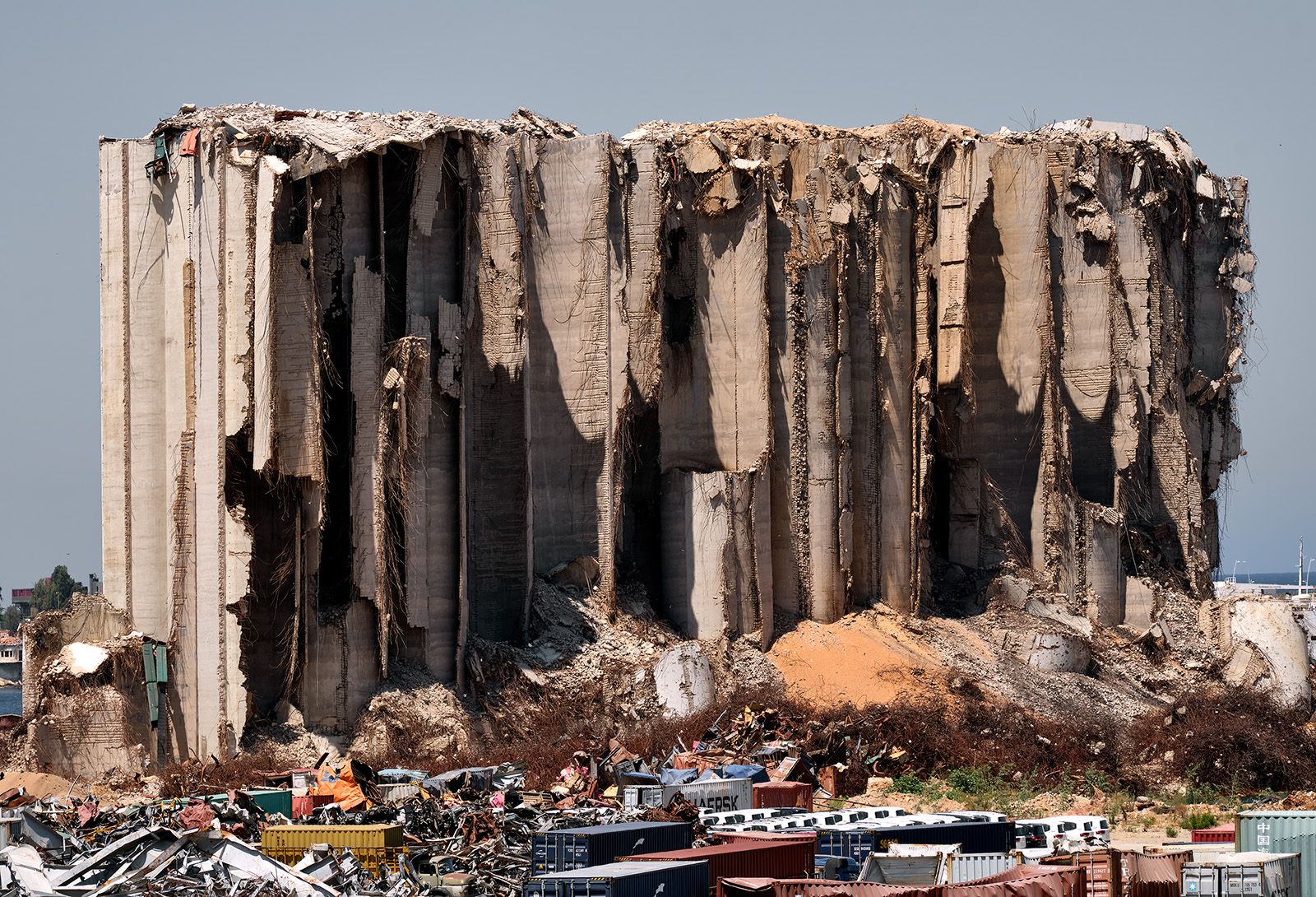
Epi Center
Epi Center, 2023, archival print/dibond/white frame/, 150-200 cm For years, these concrete silos marked Beirut's harbor entrance. They were seen as beacons of endurance after the bombings and wars they had endured for years. After the 2020 explosion, their meaning changed drastically. The structure became the iconic image of a catastrophe, etched in the world's collective memory. Just before the silos collapsed in the summer of 2022, Wilschut created this monumental photographic work. The title, "Epicentre," refers to the ambiguity of this monument.
Stratification, 2024, Rio de Janeiro, archival print/dibond/white frame, 120-160 cm
Aceredo, 2023, archival print/dibond/white frame/museum glass, 114-150 cm The Spanish village of Aceredo was submerged in 1992 when a Portuguese hydroelectric dam created the Alto Lindoso reservoir. In recent years, a large part of northern Spain has suffered a severe drought, causing part of the village to resurface. Five other villages also sank at the same time, despite residents' protests. This isn't the first time these villages have resurfaced. The persistent drought in this normally rainy region has caused the water level to drop to only 15 percent of its usual level. According to the mayor of the nearby village of Lobios, the situation is a clear consequence of the climate changes of recent years. The geopolitical situation, in which Portugal has closed six nearby dams for irrigation and power generation, also contributes to the situation. The work "Aceredo" is one of the photographic works from the "Atlantis of Galicia" project, which consists of 10 photographic works and a video piece.
The Extreme, São Paulo, 2023, archival print/dibond/white frame, museum glass, 150-255 cm
Refuge, São Paulo, 2020, archival print/dibond/white frame 2*130-174 cm (tweeluik) The Refuge tells the story of a tall building that no longer exists. Late at night on May 2, 2018, the Wilton Paes de Almeida building caught fire. Ninety minutes later, it collapsed. The 85-meter-high monumental structure imploded within seconds, engulfed in flames. Whether the catastrophe was caused by, according to various claims, a gas explosion, a short circuit in a power extension, or the owners setting it on fire in an attempt to evict the squatters, the city center was traumatized. More than 370 people who had occupied the building began camping in Paissandu Square, just ten meters from their former homes. This diptych, which contrasts the emptiness left by the fire with the bustle of the camp, reflects on how informal settlements develop and interact in São Paulo. In this case, people move from the walls of the Evangelical Lutheran Church to the walls of Our Lady Rosario of the Black Men Church, remaining suspended between various vulnerable and temporary locations.
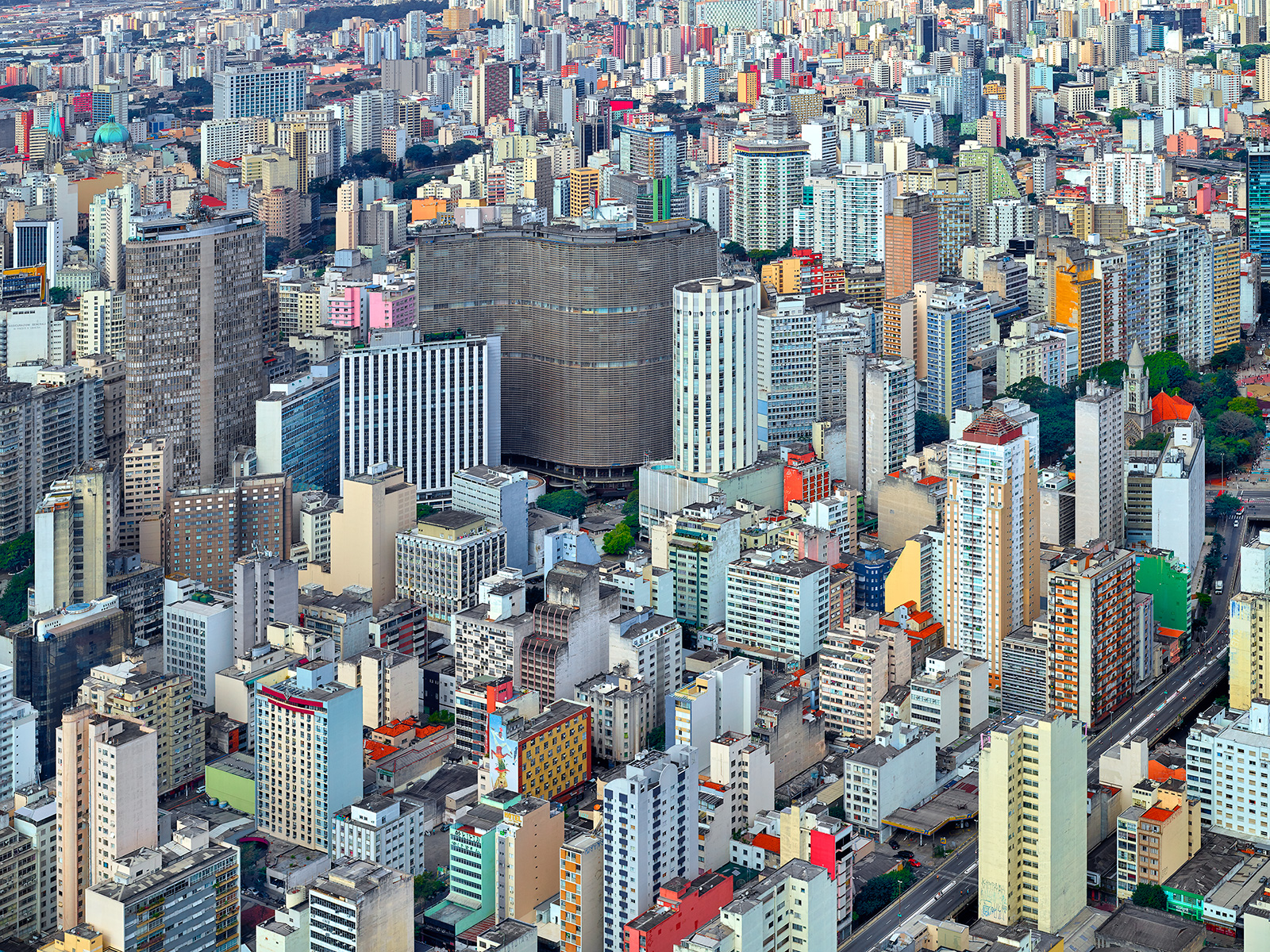
Context, São Paolo, 2019, archival print/dibond/white frame/museum glass, 150-200 cm In the densely packed streets of São Paulo, even a giant can get lost. The Copan, a building so colossal it has its own postal code, is paradoxically never seen, at least not in its entirety. This undulating concrete structure was brought to life in 1966 by Oscar Niemeyer. Intended as one of Brazil's largest housing complexes, it instead ended up as the country's largest squat. The former "ocupado" has since undergone another transformation, returning to its legal use today. Because the building is densely enclosed by other structures, its full form can only be experienced in fragments. In Context, Hans Wilschut addresses the issues of urban perception and planning, showing how distance and perspective play a role. The iconic Copan is destined to be perceived either in parts or as a part: an architectural form among other forms.
The Individuals, São Paulo, 2019, archival print/dibond/white frame/museum glass, 100-85 cm None of these thirteen swimming pools are the same. Each location reveals something about its occupant. A swimming pool per apartment is an extreme luxury, especially considering that this apartment building is located in the neighborhood right next to the infamous Paraisópolis favela. However, a closer look reveals that the promise of upper-class happiness begins to fray. Abandoned spaces and a rough concrete structure undermine the idea of ​​"luxury" and reveal a world more precarious than carefree. "Individuals" suggests that decay and brutality are not just characteristics of overcrowded ghettos, but perhaps even the fabric of society as a whole.

Non static Architectural Encounters

Date:
Location: Galerie van den Berge

Het Stenen Hoofd

Date:
Location: galerie We Like Art

Exhibition about the last sanctuary of Amsterdam

This is Hallstatt, Kein Museum!

Date:
Location: Kunsthal

Solo exhibition about tourism that got out of hand in the Austrian village.

La Nave

Date:
Location: Scampia
In association with: Kapp Producties

Documentary project about the Vele van Scampia in Naples, made possible in part by OenO subsidy CBK Rotterdam

https://vimeo.com/401329763

Transition

Date:
Location: Pakhuis De Zwijger, locatie New Metropolis

Exhibition about the transformation of Frankemaheerd and the construction of the new ING Campus.

https://vimeo.com/user37349063/frankemaheerd

Elf Steden

Date:
Location: Fries Museum

Exhibition and assignment about transition moments in the Frisian eleven cities

3 x Landschap

Date:
Location: Cultuurpallet
In association with: met Gerco de Ruijter en Ellen Kooi

Ultra Vision

Date:
Location: Centraal Museum
In association with: Stichting Stedelijke Fotografie Utrecht

Made possible thanks to OenO subsidy from CBK. Rotterdam

The Beautification Project

Date:
In association with: African artist Foundation

Project on the cosmetic greening of the Nigerian city of Lagos

This artist has no awards yet.